
Description
Description :
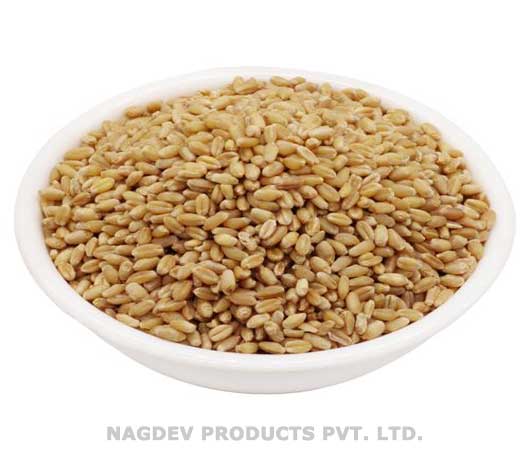
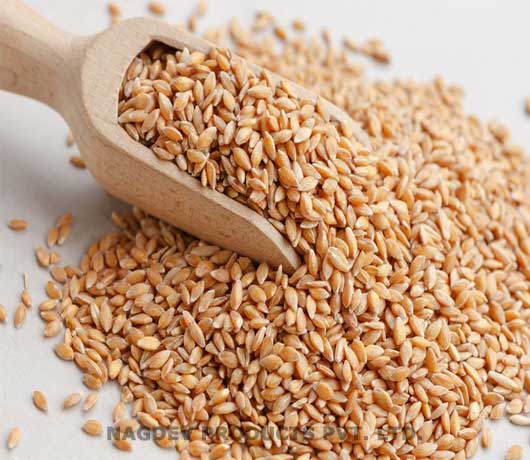
Wheat is the name given to several plants in the genus Triticum including Triticum aestivum, Triticum compactum, Triticum spelta, and Triticum durum, which are annual or biennial grasses grown primarily for their grain. Wheat species possess an erect smooth stem with linear leaves that grow in two rows on either side of the stem with larger ‘flag’ leaves at the top of the stem. The stem terminates in a spike that is made upon individual spikelets, each possessing 3–9 florets. The wheat fruit develops within the spikelets, maturing to a seed (kernel). Wheat can reach 1.2 m (4 ft) in height and like other cereals, has been developed into different varieties that are adapted to planting at different times of the year. Spring wheat is planted for a late summer harvest, whereas Winter wheat is planted for harvesting in early to mid-summer. Overwintering varieties are more commonly grown in regions with mild winters. Wheat may be referred to by variety and these include durum or macaroni wheat (Triticum durum), club wheat (Triticum compactum), spelled wheat (Triticum spelta) and bread wheat (Triticum aestivum).
Uses :
Wheat is one of the most important food plants in the world. It is used primarily to produce flour for bread. It is used widely in the production of many other baked goods. Wheat grain is also used in the manufacture of alcoholic beverages and alcohol. Wheat straw is used as an animal feed and in the manufacture of carpets, baskets, packing, bedding, and paper.
Health Benefits:
Wheat is one of the world’s most commonly consumed cereal grains. It comes from a type of grass (Tritium) that is grown in countless varieties worldwide. Bread wheat, or common wheat, is the primary species. Several other closely related species include durum, spelled, emmer, einkorn, and Khorasan wheat.
White and whole-wheat flour is key ingredients in baked goods, such as bread. Other wheat-based foods include pasta, noodles, semolina, bulgur, and couscous. Wheat is highly controversial because it contains a protein called gluten, which can trigger a harmful immune response in predisposed individuals. However, for people who tolerate it, whole-grain wheat can be a rich source of various antioxidants, vitamins, minerals, and fiber. This article tells you everything you need to know about wheat.
![Millet [Bajra]](https://www.nagdevproducts.com/wp-content/uploads/2019/10/millet-300x300.jpg)
![Sorghum [Jovar]](https://www.nagdevproducts.com/wp-content/uploads/2019/10/sorghum2-300x300.jpg)