Description
Description :
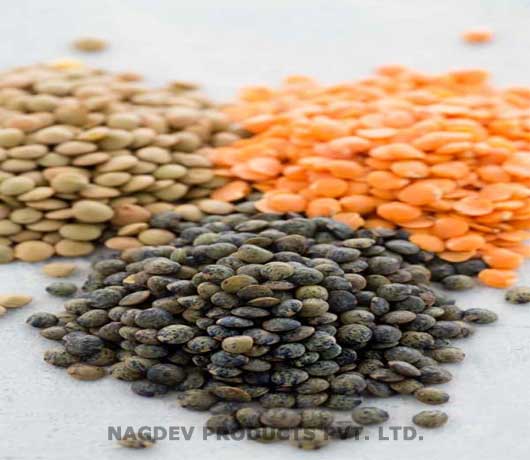
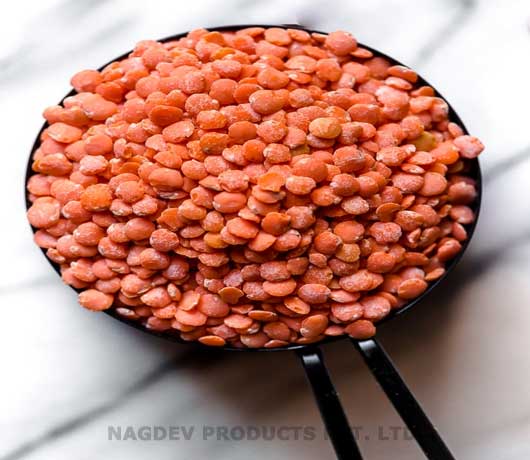
Lentil, Lens culinaris, is a bushy, annual legume in the family Fabaceae that grew for its edible seeds which are cooked and eaten. The lentil plant is slender and erect or sub-erect and has branching, hairy stems. The leaves of the plant are arranged alternately and are made up of 4–7 individual oval leaflets. The plant produces small blue, purple, white or pink flowers arranged on racemes with 1–4 flowers. The seeds, or lentils, are produced within rhomboidal pods and can range in size from 2-9 mm (0.1–0.3 in) in diameter depending on the variety and can be red-orange, yellow, green or black in color. There are generally 1–2 lentils per pod. Lentil plants can reach 15–75 cm (6–30 in) in height and as annuals, survive only one growing season. Lentil may also be referred to as red dhal or split pea and its origin is unknown although it is grown widely in Europe, Asia, and North Africa.
Uses :
The lentil seeds can be eaten raw or are cooked and eaten in soups and other dishes. They are commonly eaten as dahl (lentils seeds which have had the husk removed and then split). Lentil seeds can be used as a source of starch for the textile industry or can be ground into flour. The younger pods are sometimes eaten as vegetables.
Health Benefits:
Pulses contain protein, Iron and anti-oxidants which protect from muscle loss, provide good eyesight, sharpens the memory, is good for hemoglobin balance. Lentils help in managing blood sugar levels and are rich in manganese and phosphorous good for bones and eyesight.