


Description
Description :
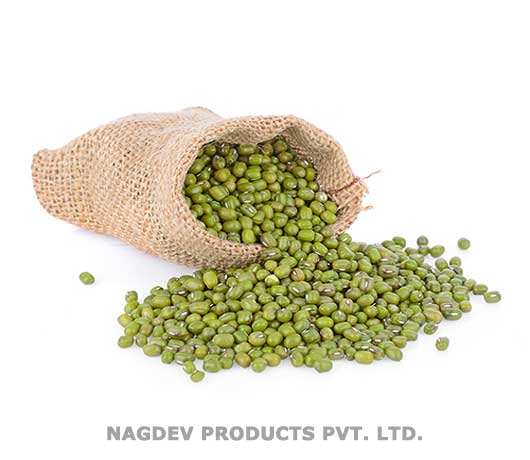
The mung bean or moong bean (Vigna radiata) is a green-colored bean and a light yellow inside. Other colors such as brown or purple are also found. Mung beans are mainly cultivated in India, China, and Southeast Asia. In the same region, it is extensively used as an ingredient in both savory and sweet dishes. Whole beans, hulled, paste or flour are used in the preparation of meals, soups, pancakes, noodles, desserts, beverages, ice cream and filling for pastry and dumplings. In Europe, mung beans are often sprouted for consumption. Mung beans are traded under the same statistical code as urad beans (Vigna mungo). Urad beans are similar beans that had long belonged to the same species as mung beans. Mung beans are also known as green grams and urad beans as black grams.
Uses :
Mungbean seeds are sprouted for fresh use or canned for shipment to restaurants. Sprouts are high in protein (21%–28%), calcium, phosphorus, and certain vitamins. Because they are easily digested they replace scarce animal protein in human diets in tropical areas of the world. Because of their major use as sprouts, a high-quality seed with excellent germination is required. The food industry likes to obtain about 9 or 10 grams of fresh sprouts for each gram of seed. Larger seed with a glassy, green color seems to be preferred.
If the mungbean seed does not meet sprouting standards it can be used as a livestock food with about 1.5 tons of mungbean being equivalent to 1.0 tons of soybean meal for protein content. Feeding trials have been conducted at Oklahoma State University for swine and young calves with good results.
Health Benefits:
Mung beans are moderately caloric, protein-rich, low-fat and cholesterol-free food ingredients. They contain fewer antinutrient compounds unlike other beans and pulses and do not contain glycosides.100 grams of dry seeds contain 347 calories, and 23.86 g or 43% of recommended daily values of protein.
Whole mung beans carry a higher concentration of dietary fiber for their size; provide 16.3 g or 43% of fiber per 100 grams. Dietary fiber works as a bulk laxative, which thereby protects the colon mucosa by decreasing its exposure time to toxic substances as well as by binding to cancer-causing chemicals in the colon. Dietary fiber has shown to reduce blood cholesterol levels by bringing down reabsorption of cholesterol-binding bile acids in the colon. Mung beans are gluten-free food items. They particularly preferred as gluten-free food alternatives in gluten-allergy and celiac disease patients.

![Gram Cultivation [Urad Dal]](https://www.nagdevproducts.com/wp-content/uploads/2019/10/Gram-Cultivation-Urad-Dal-300x300.jpg)
