
Description
Description :
There are only two species of cultivated rice in the world, Oryza sativa (Asian rice) and Oryza glaberrima (African rice). Both species are annual grasses (except in the tropics, where the plant can be perennial) belonging to the family Poaceae which are cultivated for their grain which is considered a staple food in most parts of the world. Asian and African rice plants are morphologically very similar and can be difficult to tell apart. They have rounded stems (called culms) which are divided into nodes and internodes. The plant leaves are borne on the nodes of the stem and are long and slender with a pronounced midrib. The plant produces three flowers, two of which are reduced, on a spikelet on the terminal (last) internode of the stem. The rice grain is formed by the ripened ovary of the flower and is between 5 and 12 mm in length. Rice is an annual plant, harvested after one growing season and can reach a height of between 1 and 1.8 m (3.3–5.9 ft) depending on the variety. Generally, African rice tends to form smaller, pear-shaped grains with red bran and olive to black seed coat and has several disadvantages compared with its Asian counterpart e.g. seed is easily scattered, the grain is difficult to mill and the crop gives a lower yield. The growing of Asian rice has therefore begun to supersede that of African rice in West Africa. Asian rice originates from China and African rice is believed to have been domesticated in areas around the Niger river in Africa.
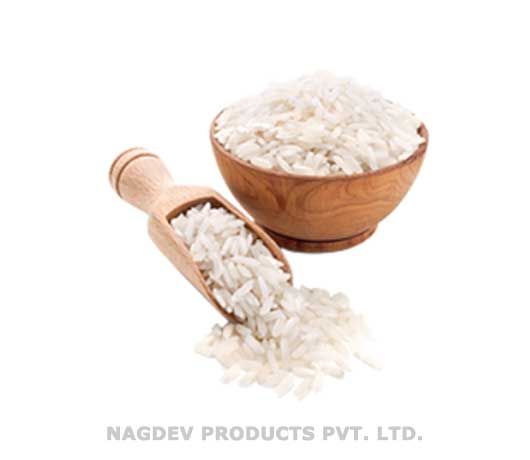
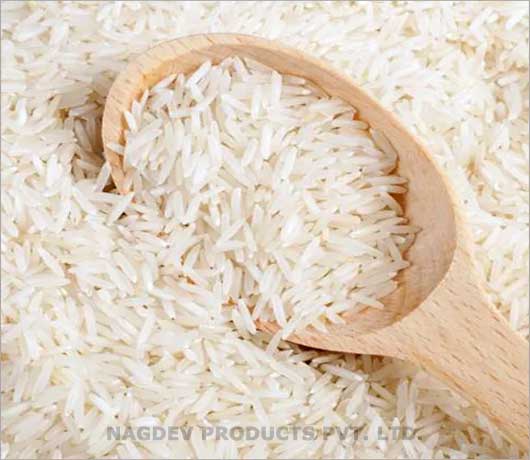
Highly nutritious, matured, as well as delicious, this variety of Basmati rice is perfect for the preparation of different kinds of mouth-watering dishes. It is ideal for preparing Casseroles, Biryani, Pulav, Kheer, etc. This is widely demanded by households, hotels, restaurants, mess, canteens, food courts, etc. owing to its distinct taste & fluffy texture. This is hygienically cultivated, processed and cleaned after harvesting from own fields and farmhouses. This 100% natural and pure variety of rice is easy to cook, consume as well as digest. With the high nutritional content, rich aroma and delectable taste, it makes the best dish.
Uses :
After removal of the rice grain from the chaff, the rice can be used as brown rice or further processed to remove the bran to produce white rice. Brown and white rice may be consumed after cooking or maybe ground into rice flour. Rice can be puffed under low pressure to produce puffed rice that is commonly used as a breakfast cereal. Rice bran oil can be produced from the inner husk and can be used as a cooking oil. Rice starch can be extracted and fermented to produce rice wine or brewed to produce sake.
Health Benefits:
Many health communities view white rice as an unhealthy option. It’s highly processed and missing its hull (the hard protective coating), bran (outer layer) and germ (nutrient-rich core). Meanwhile, brown rice only has the hull removed. For this reason, white rice lacks many vitamins and minerals that are present in brown rice. However, there are some instances where white rice is a better option than brown rice. This article helps determine whether white rice is healthy or bad for you. White and brown rice are the most popular types of rice and have similar origins. Brown rice is simply the entire whole of rice grain. It contains the fiber-rich bran, the nutrient-packed germ, and the carbohydrate-rich endosperm.
On the other hand, white rice is stripped of its bran and germ, leaving just the endosperm. It’s then processed to improve taste, extend shelf life and enhance cooking properties. White rice is considered empty carbs since it loses its main sources of nutrients. However, in the US and many other countries, white rice is typically enriched with added nutrients, including iron and B vitamins like folic acid, niacin, thiamine and more. This table shows how 3.5 ounces (100 grams) of the different types of rice compare nutritionally when cooked.
![Sorghum [Jovar]](https://www.nagdevproducts.com/wp-content/uploads/2019/10/sorghum2-300x300.jpg)
![Millet [Bajra]](https://www.nagdevproducts.com/wp-content/uploads/2019/10/millet-300x300.jpg)
