
Molecular Architecture & Properties
The chemical structure of ricinoleic acid is CH₃(CH₂)₅CH(OH)CH₂CH=CH(CH₂)₇COOH. The presence of the C12 hydroxyl group induces intermolecular hydrogen bonding, endowing the liquid oil with a viscosity roughly 100 times higher than soybean or rapeseed oil. It also renders castor oil completely miscible in pure ethanol while remaining immiscible in non-polar aliphatic mineral spirits.
Chemical Derivative Platforms
- Hydrogenation: Yields 12-Hydroxystearic Acid (12-HSA), the global benchmark thickener for multi-purpose lithium greases.
- Pyrolysis / Thermal Cracking: Produces undecylenic acid (nylon-11 monomer precursor and chemical active) and heptaldehyde.
- Alkali Fusion: Cleaves ricinoleic acid into sebacic acid (10-carbon dicarboxylic acid for bio-nylons, plasticizers, and high-temp lubricants) and 2-octanol.
Frequently Asked Questions
Why does North Gujarat castor seed yield higher ricinoleic acid content? +
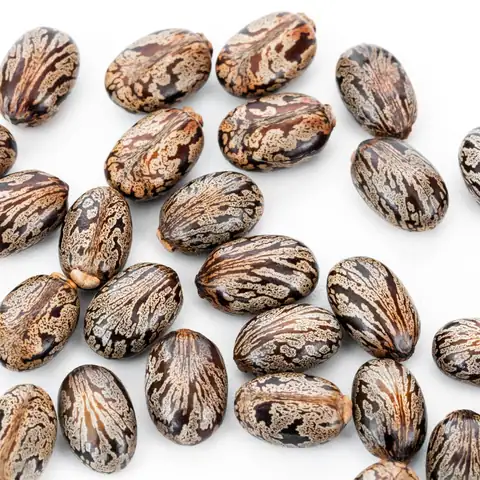
The intense sunshine, low rainfall, and dry maturation periods in North Gujarat optimize enzymatic lipid synthesis within the castor seed capsule, maximizing ricinoleic purity up to 90%.
Can ricinoleic acid (under development) be supplied as a pure isolated chemical? +
Yes. Under development, Nagdev Products offers technical Ricinoleic Acid (NDEVACID™ RIC, 85%+ purity) produced via controlled fat splitting and vacuum fractional distillation.